Translate

Thursday, April 6, 2023

Walking backwards: Stories from Saipan

(Published in ENRICH magazine, 2021)


ABOUT THIS TIME some 30 years ago, I was one among tens of thousands of Overseas Filipino Workers (OFWs) thankful for the God-given chance to earn U.S. dollars every month as employees of companies based in the Commonwealth of the Northern Mariana Islands (CNMI), better known to Filipinos as Saipan.

My Saipan stint was my initiation into the world of the OFW. It taught me firsthand how tough overseas work is mentally and emotionally. I also learned it wasn’t the solution to my financial problems.

It's nostalgic and sad looking back across the decades. Reading my notes makes me want to build a time machine so I can go back to the 20th century -- a more predictable and less confusing time than today.


***

HAMBURGER ISLAND. Lunch was a Filipino fast food feast: hamburgers, breaded fried chicken, “pansit palabok,” French fries and Coke in small plastic cups. The six of us to be interviewed for the job vacancies commandeered a long table at a burger place in Makati.

Halfway through the meal, one of the men spread a small-scale map of the Asia Pacific in front of us. He couldn’t find Saipan on the map, he said. An older man stubbed his finger on a spot off the northwest coast of Hawaii, which is where he proclaimed Saipan jto be, but which looked to me like the position of Midway Island.

I took a piece of burger and planted it on the Pacific Ocean due east of Luzon Island. “Saipan,” I said.

Looks like hamburger to me,” said an older man.

He let out a guffaw. The others laughed, too. Welcome to Saipan.


***

MAKE MINE MARVEL. Garapan, the largest town on Saipan, is a flat, lazy place that only came to life on weekends when legions of Filipino, Chinese and South Korean workers hit its streets.

Our barracks (which is what they call lodgings for overseas contract workers) was a dump. The roof was painted with rust. Corroding nail heads stained the warped walls. We later found to our sorrow the roof leaked when it rained, which was often on this rock.

The older one and I shared a room. Separating us was a long, massive closet that, to my later dismay, couldn’t muffle his maddening snoring. I had a hard wooden bed topped by a thin foam mattress.

Our employer said you couldn’t drink the tap water anywhere on the island. You’d have to buy drinking water at 50 cents a gallon. And don’t forget to zip your mouth when you shower or you might get diarrhea.

Our office was our employer’s home. His family lived on the first floor; we worked on the second to build his advertising business. The computers were all Apple Macs. One was a charming SE with the teeny weenie monitor that was a museum piece back home.

A lot of the flora here was familiar: hibiscus, bougainvillea, coconut trees, bananas, and bamboo. I took a few rocks and pitched a la Nolan Ryan at a coconut tree a few feet away.

There should be baseball on this island. And Marvel Comics. This mote is, after all, U.S. territory. To my surprise, there was no Marvel Comics on the island and no baseball, either.

***

THE INVADERS. There were more Filipinos than locals in the entire CNMI. Apart from Saipan, CNMI consists of the small islands of Tinian (about 104 square kilometers in size) and Rota (85km2). Saipan is 119 km2 in area and is the commonwealth's center of everything. CNMI is a territory of the United States so Filipino babies born here automatically become American citizens.

There were about 25,000 of us Filipinos to 20,000 of them. By "them" I mean the Chamorros and the Carolinians, which are the two main ethnic groups on Saipan. We learned you can tell a Chamorro from a Carolinian (who hail from the Caroline Islands to the southeast of Saipan) by their skin color. Carolinians are lighter skinned. Chamorros, however, comprise most of the indigenous population on Saipan.

Like Filipinos, Chamorros are mostly Roman Catholic and have English as their key language. There were, however, more Filipinos on Saipan than Chamorros when I was there.

Chamorros and Carolinians ran the government and were paid better. We were stuck with private employment and paid less.

Many Filipinos have scare stories about the "locals" as we called them. It was well known that most local employers never went to college. Some were beasts to their Filipino employees. Almost all of them chewed betel nut by the ton.

Filipinos everywhere. It was as if you never left home. And there weren’t that many whites, to my surprise. But there were hordes of Japanese tourists who either soaked up the sun at Saipan’s splendid beaches or paid homage to their war dead at Suicide Cliff.

Once, at a seaside picnic with a few Filipinos, I jokingly said the Philippines should invade this place and make it a province. It’s basically Filipino in numbers anyway.

Saipan’s only defense is its paltry police force and a few CIA spies hunkered down in a hush-hush listening post atop a heavily guarded hill. We’d win easy with the battle hardened Philippine Army, I told them.

Why should we want to do that, asked one of the guys. That would mean we’d be getting our pay in Philippine pesos instead of U.S. dollars.

The rest concurred. Case closed.

***

MAMMON. It’s a 10-minute walk to the mom and pop grocery nearest our barracks. Three local women run the store. Prices of many of the groceries I buy are cheaper here than those at a lot of the Filipino-run stores in Garapan.

Korean stores sell the cheapest, but I’d have to take the bus and pay two dollars roundtrip to get to the nearest one. Two dollars is still two dollars.

I was standing in line at a mom and pop one run by locals one Saturday morning. A brawny Filipino ahead of me was counting his change.

You short 10 cents,” he told the cashier in English.

I am not!” the young woman cashier shot back.

The Filipino laid his change on the table and showed her his receipt.

You short 10 cents,” he said again.

You musta slipped it in your pocket!” she yelled. “Now get out!

You short 10 cents,” repeated the Filipino.

Call the cops, momma!” shouted the cashier.

She screamed at the top of her voice. He screamed at her in Filipino while those of us in the queue watched in amazement and horror. They kept going at each other until two cops arrived.

One cop shouted: "What the hell's going on?"

The cashier shouted her side of the story. The Filipino, fumbling with his English, mumbled his version. He stared at the floor to avoid eye contact with the huge cop -- a local -- who was glaring at him.

The other cop quietly went up to the cash register, one of those old, pull lever types that rested on four legs, and started looking around.

The cop swept his fingers under the register, and out came 25 cents, 10 cents, another 10 cents, more 25 cents and a lot of loose change.

Hey, look at this,” the cop called out to his buddy.

The big cop took a hard look at the loose change. He took 10 cents from the counter and shoved it into the pants pocket of the Filipino and told him to go home.

Ten U.S. cents! That’s just three Philippine pesos! No Filipino in his right mind would risk jail time for three pesos. Three pesos can’t even buy you a bottle of Coke.

But this is dollar country and we’re talking U.S. dollars. That’s why this screaming Filipino and I were here. To earn almighty U.S. dollars.

There is but one god.

***

DECENT EXPOSURE. My boss and I had just come from a client meeting and were headed home. At the parking lot, I was startled by the sight of three young girls and a young boy playing volleyball on the beach, which was only short distance away from me.

The girls were wearing long skirts that extended below their knees but were naked from the waist up. Their long, black hair revealed their breasts as they jumped and yelled in delight as they hit the ball back and forth. I stared at them.

"Never seen naked girls in public before, Art?" asked my boss, who was from the island country of Palau to the southwest of Saipan.

"Is that legal?" I asked.

"They're Yapese from Yap island, which is close by," he said. "On Yap, it's indecent for women to show their knees but not their breasts."

I was dumbfounded; didn't know that.

"I know the guy," said my boss. "Come on. Let's say hello. Hey, Joseph," he yelled.

The young man turned towards us and waved.

"Uncle Pete!" he yelled back.

They high fived. The girls gathered round them and they began engaging in conversation. I watched the proceedings with interest.

"Hey, Art," my boss waved to me. "Come on over."

As I approached, one of the girls pointed excitedly at my direction. She turned to the others and said something.

"Raina tells us you look almost exactly like a friend of hers," said my boss, pointing to the girl who pointed at me.

I looked at Raina, a tall, slim lass with a kayumanggi complexion -- and bare breasted.

"You're one unlucky girl for knowing two ugly guys,” I said, smiling.

The girls burst out laughing.

"Yes, I am," she quickly replied.

Again loud laughter from the girls.

"Well, looks like you two are getting along fine," said my boss.

I looked at Raina and smiled. She smiled back.

***

LOVE BITES. One odd thing I noted on Saipan was the dearth of romances between Filipino men and local women. I never met a Pinoy guy who had a local for a girlfriend, which was surprising since I'd come across my fair share of really pretty Chamorritas and Carolinians.

My officemates and I were shopping at a Joeten grocery when we came across a couple of local teenage couples. The teen girls were pretty: one was clad in sheer nighties, which I'd seen some girls wear on the street as if they were day clothes. The other had on a skin tight tank top and really short shorts.

It wasn't their clothes that made me remember these girls, however. What struck and astonished me was that both of these girls had a red circle of bright red "hickeys" (kiss marks) around their necks.

"Don't stare, pre," said one of the guys with me who'd been here for more than a year.

He later explained girls displayed their kiss marks in public because it was a local custom. The love bites show these girls to be desirable, he said. This was the first but not the last time I saw "hickey necklaces" on young women, who proudly flaunted them as badges of honor.

I couldn't help thinking to myself: "What if we had this custom back home?"

Monday, April 3, 2023

Can our feet shape our lives?

 (Published in ENRICH magazine 2021)


OUR FEET ARE the most abused part of the human body. If you believe the answer is anything other than your feet, you'd better re-evaluate your beliefs, mate. Of course, it's your feet.

We ruthlessly pound our feet day in and day out for our entire lives without qualm and forget about them until an accident or illness reminds us of their irreplaceable value. Our feet make life worthwhile by taking us to the places that matter to us.

Over the course of that journey, the average American will take some 5,000 steps everyday, which is the equivalent of four kilometers, according to data from WebMD. An American will walk at least 1.8 million steps over the course of a year.

Over 90% of them have access to at least one car, which suggests Americans don't really walk that much. Americans travel on their butts more than we do.

On the other hand, Pinoys aren't blessed with the benefits of a motorized society. Only some six percent of the more than 25 million Filipino households owned a car, jeep or van in 2018, noted Statista. Around 25% of Filipino households owned a motorcycle or a tricycle.

This means about seven in 10 Pinoys either commute via public transport or walk to wherever it is they're going. Commuting means you have to do a lot of walking to get to a bus, a jeep, a tricycle or to an LRT or MRT station. Rural Filipinos definitely walk a lot more than their urban brothers due to a dearth of motor vehicles in the provinces.

Also, the raging COVID-19 pandemic has forced Filipinos to walk more given trip limitations imposed on public transportation during CQs (community quarantines) and lockdowns. This fact plays out on TV news videos depicting commuters walking to work or returning home because there are no rides to be had.

What all this data really drives home is the painful fact the average Filipino's most reliable mode of transportation is still his two feet. It reveals the average "kababayan" definitely takes more than 5,000 steps a day, which also means we should be kinder to our feet.

You can pamper your pedal extremities with soothing foot massages, moisturize them often with lotions and creams, pedicure them regularly and check them daily for cuts, bruises and calluses. And rush to a podiatrist if there's something seriously wrong with your feet such as plantar fasciitis.

Other proven ways to protect your feet: avoid wearing tight-fitting shoes that hurt and might deform your feet, avoid wearing high heels regularly and stop wearing "tsinelas," or flip-flops, which don’t provide enough arch support for flat-footed Pinoys.

These suggestions might seem like overkill but they make eminent sense. Ask yourself this question: "Can I get anywhere, both literally and figuratively, without my feet?" So, love your feet and your feet will love you back.

This brings us to the main point of this story: to love your feet more, you've got to know more about them. For instance, do your feet affect your health and reveal your personality?

Sexy Egyptian feet

Let's start with foot shapes. There are anywhere from five to eight common foot shapes worldwide depending on the sources you peruse. Most of these foot shapes have Caucasian names but still apply to Filipinos, however.

The most widely accepted foot shapes are called Celtic, Egyptian, German, Greek, Roman and Square. Then, there's this outlier called the Asian foot.

I bet you looked at your feet after reading this and asked yourself, "What's my foot shape called?" I also bet you'll discover that after you finish reading this story and look at the feet of the other people in your household, you'll find their foot shapes are mostly either Egyptian or Greek.

The Egyptian Foot is the most elegant looking because its toes gently taper downward in a 45 degree curve from the "big toe" to the "little toe." This means the longest toe is the big toe (also called "the hallux" or "great toe") while the shortest is the little toe (or the "baby toe").

The second toe, or "long toe," is slightly shorter than the hallux; the third toe, or "middle toe," is slightly shorter than the long toe while the fourth toe, or "ring toe," is slightly shorter than the middle toe.

The sexy Egyptian foot is the most functional of all foot shapes, according to podiatrists in New Zealand. At least 80% of the Japanese population (126 million in 2019) is estimated to have Egyptian Feet. As a result, shoes in Japan are generally made to fit Japanese with Egyptian feet. Many Japanese shoemakers clearly label their shoes are made to fit Egyptian feet.

Egyptian feet


Egyptian feet are the type least likely to suffer from arthritis, bunions and load-dependent pain, said a story published in a major British newspaper. A study by Japanese researchers said Egyptian feet also seem to better protect against ingrown toenails.

This lovely foot, however, comes with its share of drawbacks. Because Egyptian feet are usually longer and narrower than other foot shapes, they induce greater supination when walking. 

Supination occurs when a person places his weight on the outside of his foot while walking or running. Shoe heels whose rear outer edges are worn away are signs its wearer supinates.

The uneven weight distribution due to supination causes stress on the heel when one walks or runs. Supination also imposes excess strain on your ankles. This can result in pain in the heels and balls of the feet.

Supination can also trigger calluses (thick, hardened layers of skin), bunions (a bony bump that forms on the joint at the base of the big toe) and shin splints (an inflammation of the muscles, tendons and bone tissue around the tibia).

Some people insist one's foot shape can indicate one's personality. While this contention it patently untrue, it might be amusing to know people with Egyptian feet are said to have "royal feet." People with Egyptian feet also enjoy being pampered and cared for. They also like to live life surrounded by things beautiful.

The Greeks among us

A Greek foot is easy to spot: the second or long toe is longer than the rest. This is due to the length of the metatarsals (the long bones connecting your toes to the back of your foot). Metatarsals curve upward to form the arch of your foot. In people with Greek feet, the first metatarsal, which is the thickest, is shorter than the thinner second metatarsal.

Also known as “flame foot” or "Morton's toe," the Greek foot is an inherited or genetic trait and not an indication one's forebears came from Greece. The Greek foot is, however, a common trait among Greeks. It might even be found in some 30% of the world's population, said one estimate.

The Greek foot might also be the most common in the United States. A study involving American college students found 42% had Greek feet. This trait was more prevalent among young men compared to young women.

The world famous Venus de Milo statue at the Louvre Museum in Paris and The Statue of Liberty in New York City have Greek feet.

Greek feet

There has been research suggesting Greek feet might be an advantage in sports. A 2004 study found professional athletes tended to have Greek feet more frequently than non-athletes.

On the other hand, having a shorter first metatarsal (the big toe) could place more weight on the thinner second metatarsal bone. A longer second toe means the pressure exerted with every step isn't evenly distributed.

People with Greek feet might eventually suffer from foot aches and pains such as plantar fasciitis (an inflammation of the fibrous tissue, or the plantar fascia, along the bottom of the foot); metatarsalgia (ball-of-foot pain) and Morton’s neuroma (a painful condition affecting the ball-of-foot).

On the plus side (and this again is only speculative), people with Greek feet are said to be sporty and creative. They do have the tendency to be impulsive, which can lead to stress.

It's said these people also have leadership qualities. A person with Greek feet whose second toe is narrow at the bottom and is much wider at the top is said to be very expressive and have drama queen traits.

Roman feet conquer the world

Roman feet, which seem to be prevalent among the Caucasian or white rsce,  are thought to be the world's most common foot shape and might be present in a quarter of the world’s population of 7.7 billion persons.

In a Roman foot, the big toe, long toe and middle toe are almost the same length and are the longest. The ring toe is shorter than the middle toe while the baby toe is the shortest of them all.

People with Roman feet are less prone to supination and pronation (the inward roll of a foot when walking or running) due to its stiffer form. They also typically have high arches, making for faster acceleration when running and quicker changes of direction.

Roman feet
On the minus side, people with Roman feet could be more prone to "hammertoe," an abnormal bend in the middle joint of the long, middle, ring and baby toes. Hammertoe is caused by an existing imbalance in the muscles and ligaments that keep toes straight. It can be reversed with treatment, however.

Speculation has it people with Roman feet are said to be well balanced and have a well-proportioned bodies. They also tend to be outgoing and love being tourists exploring new places.

As for the other foot types, the German foot is a rectangular-shaped foot identified by a large big toe with the other four toes almost of the same length. In a Celtic foot, there is a large but short big toe, a long second toe with the remaining three toes decreasing in length. A square foot is one where all five toes are of equal length.

The surprising Asian foot

It's debatable if there's a foot type called the "Asian foot."  It's said Asian feet are shorter than Western feet by an average of two centimeters. Asian feet also have a lower instep; are wider and less bony and are higher-arched and narrower than Western feet.

Hong Kong-based Dr. Alexandra Duff, a UK trained podiatrist with 20 years clinical practice, begged to differ. She insists Asian feet tend to be slightly broader in the forefoot and have a lower arch profile compared to Western feet.

She claims 80% of Asians are flat-footed (which is the same as having low arches), the largest number among all ethnic group. Low arches are implicated in overpronation; high arches are a cause of oversupination.

A Western study said low arches (or pes planus) tend to be very common among Asians with estimates suggesting it occurs in around 20% of this population. This estimate is markedly lower than Dr. Duff's.

The debate over the structure of the Asian foot doesn't obscure the reality Asian feet still fall within the six foot types enumerated in this story.  I wasn't able to find a single person I know, and whose feet I checked, with Roman, German, Celtic and Square shaped feet. Many of these people are also flat-footed.


Thursday, March 30, 2023

UFOs don't seem to like visiting the Philippines

 (Published in ENRICH magazine, 2021)


IT'S BEEN 72 YEARS since the "first" UFO (unidentified flying object) sighting was recorded in the Philippines, and new reports suggest "extraterrestrials" from outer space or somewhere else in the multiverse continue to traverse Philippine skies at will.

To acknowledge there are alien spacecraft roaming our skies means accepting the thesis a star-faring civilization exists within "easy" reach of our solar system.  "Easy" in this sense means about 17,000 light years away (1.608324e+17km), which is the estimated distance between technological civilizations in the Milky Way Galaxy posited by scientists at the University of Nottingham in England. We have yet to discover another Earth with life, intelligent or otherwise, however.

These scientists expounded on their theory about intelligent extraterrestrial life in a study published recently in The Astrophysical Journal, a peer-reviewed scientific journal of astrophysics and astronomy.

This same study makes the bold assumption, based on mathematical calculations, there might be at least 36 intelligent technical civilizations throughout the Milky Way. The stupendous distances between these technological societies, however, hinders efforts by these aliens to discover similar societies elsewhere. Which isn't to say at least one of these technological civilizations might have made god-like scientific strides that make rapid planetary travel possible.

"There should be at least a few dozen active civilizations in our galaxy under the assumption that it takes five billion years for intelligent life to form on other planets, as on Earth," said Christopher Conselice, a professor of Astrophysics at the University of Nottingham who led the research. "The idea is looking at evolution, but on a cosmic scale. We call this calculation the Astrobiological Copernican Limit."

The universe is home to more than a hundred billion trillion stars, most of which have exoplanets revolving around them, and two trillion galaxies. The unimaginable number of exoplanets out there beyond the Milky Way increases the possibility of older, god-like advanced civilizations with the ability to bend spacetime or to travel with ease between galaxies using technologies beyond our ken. That a civilization like this would have discovered our Earth would have been more of an accident rather than by design.

UFOs over Pinoyland

As far as UFO sightings go, the Philippines appears to be a backwater destination for a star-travelling alien people. The Philippines has not become a UFO hotspot like Chile (the country that claims to have the most number of UFO sightings on the planet) likely for the same reason our tourism industry still flounders: it isn't more fun in the Philippines.

Nor is the Philippines likely to become a hotspot given the paucity of flying saucer encounters since Sept. 5, 1949. This is the day when the "first" UFO in the Philippines was spotted over Clark Air Base in Angeles City, which eventually became the largest overseas military installation of the United States Armed Forces.

This historic event was revealed in Project Blue Book, the famous study of UFOs by the U.S. Air Force conducted from March 1952 to Dec. 17, 1969. The Philippines' first UFO case, however, came only two years after what's considered the first modern UFO sighting in the United States: nine flying saucers in the air near Mount Rainier in Washington State on June 24, 1947.

Apart from the Clark sighting, others documented by Project Blue Book include an event at an unspecified location on November 1957; another at Clark that same month and eight more until June 29, 1966 when the final sighting was recorded over Ligao, Albay. In all, a scant 11 sightings in the Philippines were listed by Project Blue Book from 1949 to 1966. These incidents are only those seen by eyewitnesses, meaning the total number of intrusions is very much higher.

Alleged UFO over Pangasinan in 2022
Hunting for UFOs

Other international sources confirm UFO sightings in the Philippines beyond 1966. A UFO was sighted on August 1, 1961 over Subic Bay in Zambales, according to the website, UFO Hunters. This was the website's earliest reported UFO incident in the Philippines.

Subic was then home to U.S. Naval Base Subic Bay, the U.S. military's second largest overseas military installation after Clark Air Base.

This website, which was co-founded by a multinational but mostly American group of UFO hunters and enthusiasts, listed fewer than 90 sightings in the Philippines from 1961 to 2019. The overwhelming majority of the UFO sightings reported by UFO Hunters occurred over Metro Manila and Calabarzon (Cavite, Laguna, Batangas, Rizal and Quezon). There were a few in Northern and Central Luzon and none in the Visayas and Mindanao, as can be seen from a list and a map on the UFO Hunters website.

UFOs seen in Philippine skies were variously described by eyewitnesses as being shaped like dots, discs, triangles, eggs, stars, rectangles and ovals.

On the other hand, UFO Hunters lists the 20 second-long sighting of a circular-shaped object over Mandaluyong City on April 4, 2019 as the last sighting of a UFO in this country.

This event involved two round white objects flashing blue lights as they floated in the sky. An eyewitness said one UFO slowly headed towards the direction of the sun while the other remained stationary. Both UFOs vanished after several minutes.

The site listed no sightings in 2020 likely due to the Covid-19 pandemic keeping most Filipinos indoors or to a lack of data.

A now static blog named "UFOs in the Philippines" also cited UFO Hunters and other sources in tracking UFO activity in this country. With this blog apparently inactive, it's been left to the non-profit UFO Society of the Philippines (UFOSP) and like-minded organizations, and media firms such as GMA Channel 7 to keep track of local UFO sightings.

A UFOSP officer, Zaldy Vilches, talked about UFO sightings in an special episode on UFOs aired by the Channel 7 news program, Brigada Siete, on March 6, 2021.

Earthly investigations

The three UFO sightings examined by Brigada Siete in this episode occurred over the past year. It included an alleged UFO landing in Marawi City (the capital of Lanao del Sur), a daytime sighting in Camarines Sur and a nocturnal event in Pasig City. These occurrences, however, weren't included in the UFO Hunters database.

Brigada's investigations proved the brilliant light seen on video cam in Marawi at night was caused by the intense glow from a huge local government LED display inside the city. The daytime Camarines sighting -- a white dot falling towards the ground -- was probably the result of light reflecting off the video camera's sensor, said a video expert.

The most astounding video, that of a bright red aerial object dousing the ground with what appeared to be a liquid and smoke, was only an aerial disinfection drone on a nightime  disinfection flight, said a statement from the Pasig city government.

An episode of another Channel 7 news program, "Kapuso Mo, Jessica Soho" broadcast Feb. 17, 2019, investigated the first UFO sightings in Negros Occidental.

Eyewitness smartphone video taken February 14 showed a dot of light in the night sky over the Talisay Silay Milling Company sugar mill. The local government brushed aside the claim the light was a UFO and said it was just a "red flare," whatever that means. In her search for answers, Soho went to PAGASA (Philippine Atmospheric, Geophysical and Astronomical Services Administration).

Jose Mendoza IV, team leader, Astronomical Sightings at PAGASA was uncertain. At first he said the dot was the International Space Station (ISS), which he noted passes over Negros every 6:00  pm to 7:00 pm. The video, however, was taken at about 8:00 pm.

Next, Mendoza said the dot might be the planet Mars. When asked why the object moved when Mars doesn't, Mendoza changed his mind and said the UFO might be an airplane.

Mysterious lights in the Pampanga sky seen  in 2015
Confused

Mendoza's confusing answers illustrate the government's dearth of knowledge about the UFO phenomenon. The relative scarcity of reported UFO sightings in this country -- about one per year since 1949 -- means the government has no incentive to spend taxpayer money on investigating UFOs in depth.

In contrast,  there were 4,881 reported UFO sightings in the United States in 2017 alone, said the National UFO Reporting Center, an organization in the U.S. that investigates UFO sightings and alien contacts.

The fact two local TV programs seemed to explain recent UFO sightings as mere earthly phenomena diminishes any incentive for Filipinos to believe the truth is out there. And, of course, Filipinos that report seeing lights in the sky whatever their shape are still widely regarded as, well, less than sane.

UFOSP recognizes this stigma and on its Facebook page states its main objective "is to encourage Filipinos to freely express and share their thoughts with other level-minded people. Thus, the UFOSP strives to provide a common ground where everyone could discuss the UFO enigma openly without the social stigma."

UFOSP also says it "aspires to establish an outlook based on our homegrown understanding and belief, not by chiefly echoing foreign perspectives, because we seriously consider UFO-related matters not merely as a theory grounded on Area 51 but more importantly, as an issue that predates way and far back the time we were recognized in the annals as Filipinos."

Light pillars in the sky over Masbate in 2021 mistaken for UFOs
Flir, Gimbal and GoFast

Interest in UFOs is again spiking because of the release by the U.S. federal government this June 25 of its preliminary report on "Unidentified Aerial Phenomenon," or UAP, the acronym it now uses instead of UFO.

The report was mostly grounded on evidence gathered from U.S. Navy reports over the past 20 years. It centered round three videos, which were given the names Flir, Gimbal and GoFast, and the testimonies of fighter pilots that figured in these close encounters in 2004, 2014 and 2015.

The black and white videos recorded by missile targeting instruments aboard twin-seat McDonnell Douglas F/A-18 Hornet combat jets officially documented these bizarre encounters with three types of UAPs.

While the three videos are compelling in themselves, the testimonies of the four fighter pilots involved in the first encounter in 2004 leaves one almost convinced the UAP they encountered was other worldly since its aerial maneuvers broke all the known laws of physics and were impossible with existing human technology.

The pilot that encountered this UAP was the commander of one of the fighter squadrons aboard the U.S. Navy nuclear-powered aircraft carrier USS Nimitz (CVN-68). On Nov. 14, 2004, Commander David Fravor flying a two-seat F-18 Super Hornet saw just above the waves off the California coast a 40 foot-long oval-shaped object, white in color, hovering above an ocean disturbance that seemed to him like a huge submarine underwater.

Flir and Gimbal videos of UAPs from the U.S. Navy

Favor dove to get a closer look and was stunned when the UAP climbed towards him and then quickly vanished. A second fighter patrol took off from Nimitz to investigate. One of the jets was equipped with an advanced Forward Looking Infrared (FLIR) camera, which detected and recorded the maneuvering UAP. The pilot of this jet described the UAP as a flying "Tic Tac" (a popular brand of mint candy with white shell) but did not himself see the UAP.

The Gimbal and GoFast videos of UAPs performing impossible flying maneuvers were recorded in 2014 and 2015 by fighter pilots of the aircraft carrier, USS Theodore Roosevelt (CVN-71).

The prelim report reached no conclusion about what the UAPs were, citing a lack of evidence. It did, however, confirm the recordings were those of unexplained actual physical objects and were not false readings. The report said the confirmed UAPs "probably lack a single explanation." 


Saturday, March 25, 2023

Poultry, pigs and the next global pandemic

 (Published in ENRICH magazine 2021)

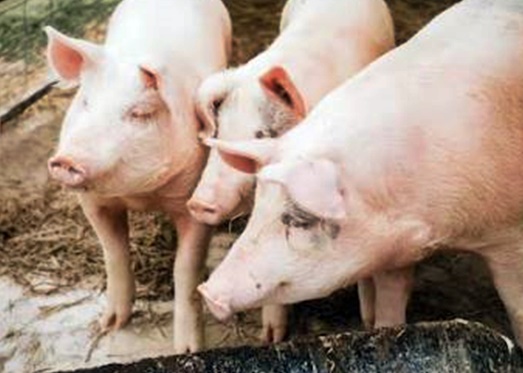
PIGS AND POULTRY could be the likely hosts of the next pandemic set to ravage the human race, perhaps over the next 40 years.

Lost in the tumult surrounding the global battle against the still uncontained COVID-19 coronavirus and its variants is the alarming news of outbreaks of a new strain of African swine flu (ASF) called "G4 EA H1N1," and avian influenza strains, specifically "H5N1.” These flu viruses carry the potential to be the next global pandemic but as of now represent a distant danger.

Medical experts worldwide have consistently warned the next pandemic is inevitable. Earlier this year, the World Health Organization (WHO), global epidemiologists and infectious hazard experts reiterated that warning, affirming the next pandemic is a statistical certainty.  In their professional opinions, a future pandemic is not a matter of "If," but of "When” and "How serious.”

The Center for Infectious Disease Research and Policy (CIDRAP) in Minnesota, whose aim is "to prevent illness and death from infectious diseases,” said there have been nine flu pandemics over the past 300 years. This statistic means one flu pandemic erupts every 30 to 35 years, or about three per century. CIDRAP estimates the 21st century might see up to five flu pandemics, however. 

The world has been hit by two pandemics so far this century. These are the 2009 H1N1 swine flu pandemic that also struck the Philippines and the raging COVID-19 pandemic, which isn’t caused by the flu virus but by the SARS-CoV-2 novel coronavirus.

In 2011, WHO said “the world is ill-prepared to respond to a severe influenza pandemic or to any similarly global, sustained and threatening public health emergency.” This prediction, made in the aftermath of the global 2009 H1N1 swine flu pandemic, was proven accurate with the onslaught of the ongoing COVID-19 pandemic starting December 2019.

Pandemic potential

G4 EA H1N1 swine flu has the potential, however low, to trigger a new pandemic if left unchecked. A peer-reviewed study conducted by Chinese researchers and published in the journal, Proceedings of the National Academy of Sciences (PNAS), in July 2020 issued the stark warning that further transmission of the G4 EA H1N1 swine flu strain found in Chinese pigs might see this virus “adapt and become a pandemic.”

Also known as the "G4 swine flu virus," swine-origin influenza A (H1N1) virus (S-OIV) is a virus strain discovered in China in 1996. It's a variant genotype 4 (or G4) Eurasian avian-like (EA) H1N1 virus that mostly affects pigs.

The H1N1 subtype has a long history as a killer of humans. It caused the horrific 1918 Spanish Flu pandemic estimated to have killed more than 50 million people worldwide and infected a third of the world’s population. It also caused the 2009 swine flu pandemic that claimed from eight to 27 lives in the Philippines.


The 2009 swine flu pandemic from January 2009 to August 2010 led to the deaths of more than 17,000 people worldwide, said WHO. This pandemic saw its first confirmed case in the Philippines in May 2009 and its first death in June.

Epidemiologists said some H1N1 strains are already endemic in humans. These endemic strains are responsible for a small fraction of all influenza-like illness, as well as all seasonal influenza. On the other hand, there are H1N1 strains endemic in pigs (swine influenza) and in birds (avian influenza).

The PNAS paper said "G4 EA H1N1 viruses possess all the essential hallmarks of being highly adapted to infect humans ... Controlling the prevailing G4 EA H1N1 viruses in pigs and close monitoring of swine working populations should be promptly implemented."

It noted the G4 viruses have the right characteristics for causing infections in people. These worrisome traits include the ability to grow well in human lung cells and to spread by respiratory droplets (much like COVID-19).

The study said the G4 virus "has shown a sharp increase since 2016, and is the predominant genotype in circulation in pigs detected across at least 10 provinces" in China. It documented three human cases of G4 infections in humans, all in China.

The study also found that some 10% of Chinese swine workers that had their blood samples taken had evidence of prior infections with G4 viruses. This suggests human infections are more common than previously thought.

Thankfully, the G4 virus can't be transmitted from person-to-person -- at least not yet. On the other hand, previous flu outbreaks have proven influenza viruses often jump from pigs to humans given time and favorable conditions.

 “The likelihood that this particular variant is going to cause a pandemic is low,” said Dr. Martha Nelson, who read the study. Dr. Nelson is an evolutionary biologist at the U.S. National Institutes of Health’s Fogarty International Center who studies pig influenza viruses and their spread to humans.

“You’re really not getting a good snapshot of what is dominant in pigs in China,” according to Dr. Nelson, who also said there is a need for more sampling.

Ominously, the study said G4’s inclusion of genes from the 2009 H1N1 pandemic “may promote the virus adaptation,” allowing for human-to-human transmission in the coming years.  It urged monitoring of farms and workers in China since further transmission might cause the G4 virus to “adapt and become a pandemic.”

The study said all the evidence indicates the G4 EA H1N1 virus "is a growing problem in pig farms, and the widespread circulation of G4 viruses in pigs inevitably increases their exposure to humans."  It said the G4 group of H1N1 swine influenza viruses have “the essential hallmarks of being highly adapted to infect humans” and are, therefore, of potential pandemic concern.

The study concluded G4 has been spreading in pigs in China since 2016, and has become the predominant genotype found in Chinese pigs today. The danger zoonotic transmissions might occur in the future led the study authors to urge closer monitoring of G4 EA H1N1 in China.

In the study, Chinese researchers analyzed 30,000 swabs collected from pigs at slaughterhouses in 10 Chinese provinces from 2011 to 2018. They found 179 swine influenza viruses, most of which were G4.

One consequence of the study was that in July 2020, the U.S. Centers for Disease Control and Prevention (CDC) began taking action to monitor and prepare the United States against this emerging public health threat from China. Among the actions taken by CDC were to ramp-up coordination with its public health partners in China, and requesting G4 virus samples from Chinese pigs.

CDC is also evaluating if an existing candidate vaccine virus against a closely related flu virus called “G5” can protect against the G4 viruses. If not, CDC will develop a new vaccine specific to G4 viruses.

H5N1 outbreak

In February 2020, China reported the latest outbreak of the H5N1 avian flu in the southern province of Hunan.  The Ministry of Agriculture and Rural Affairs confirmed an outbreak of a "highly pathogenic (or deadly) strain" of H5N1 bird flu at a farm in Shaoyang city in Hunan. It reported the culling 17,800 poultry following the outbreak at this and other farms.

This was the second H5N1 outbreak to hit China in 14 years. In 2006, an H5N1 outbreak struck eight countries, including China, leading to the deaths of 79 out of 115 positively diagnosed people worldwide, said WHO.

Highly pathogenic relates to the ability of a virus to kill chickens. It doesn't refer to how infectious a virus might be to humans, other mammals or other species of birds.


Health experts said most bird flu strains aren’t highly pathogenic and cause few signs of disease in infected wild birds. WHO said H5N1 is rare in humans but if H5N1 does infect humans, the mortality rate might reach a dreadful 60%. In contrast, the mortality rate for COVID-19 was estimated at 3.4% globally by WHO in March 2021 compared to 1% for seasonal flu.

H5N1 can be transmitted to humans typically through contact with dead birds or a contaminated environment. In July 2013, WHO said 630 confirmed human cases due to H5N1 infections from swine resulted in the deaths of 375 people since 2003 for a mortality rate of 60%,

"The virus does not infect humans easily, and spread from person to person appears to be unusual," said a statement from WHO. "There is no evidence that the disease can be spread to people through properly prepared and thoroughly cooked food."

Swine flu plus bird flu

Of great concern to the medical community it the mounting danger from a new bird flu pandemic triggered by shortages of pork. This danger is especially acute in China, which consumes more than half the world’s total pork production while producing more than a half of the global pig population. Pork is the most consumed type of meat in China.

Persistent pork meat shortages ignited a surge in imports while also spurring backyard poultry farming, a shift some health experts fear might trigger another bird flu pandemic..

“This is very scary because we know that there will be another pandemic,” said Dr. Kristina Osbjer, a veterinary epidemiologist, who used to work for the United Nations Food and Agriculture Organization (FAO). “Now, there is an increased risk of avian influenza being the origin.”

Global health authorities now see the relentless global spread of H5N1 influenza in birds as a significant and unprecedented pandemic threat.

"As long as avian influenza viruses circulate in poultry, sporadic infection of avian influenza in humans is not surprising, which is a vivid reminder that the threat of an influenza pandemic is persistent," said WHO about human infections from bird flu.

Other variants

Other avian flu strains with pandemic potential originating in birds are currently causing concern in China, South Korea and Japan.

In March 2021, Japan and South Korea reported their continuing struggle to control bird flu outbreaks that forced them to cull millions of chickens, ducks and quails. Japan is grappling against an outbreak of the highly pathogenic avian influenza H5N8 that began in in wild birds and poultry. Similar outbreaks have been reported in 12 other countries, mainly in Western Europe, since July 2020.

FAO said the outbreak in Japan and South Korea is one of two separate and ongoing bird flu epidemics. It said bird flu strains in Asia and one in Europe originated in wild birds spreading the disease during migration.

In December 2020, Japan culled more than 11,000 birds after a strain called H5N8 was discovered at an egg farm in Higashiomi, Shiga prefecture in the southwestern part of the country. The Ministry of Agriculture, Forestry and Fisheries declared the outbreak as Japan's worst of its kind.

"The virus found in Japan is genetically very close to the recent Korean viruses and, thus, related to viruses in Europe from early 2020 -- not those currently circulating in Europe," said Madhur Dhingra, a senior animal health officer at FAO. "This means that we currently have two distinct epidemics in eastern Asia and Europe.”

Also in December 2020, South Korea accelerated the culling of poultry in H5N8 affected areas. The Ministry of Agriculture, Food and Rural Affairs reported South Korea's first farm-related case in Jeongeup, some 290 kilometers south of Seoul, in late November. South Korea culled 5.8 million chickens, ducks and quails in the last two months of 2020.


Friday, March 24, 2023

Sweat more to better fight COVID-19

(Published in ENRICH magazine 2021)

WITH COVID-19 on the way to becoming an endemic disease in the Philippines, and with the slow pace of local vaccinations, Filipinos will have to find more ways to protect themselves from this disease since herd immunity might be more than a decade away -- if worst comes to worst.

Ramping-up physical activities such as doing household chores and exercising offer an additional layer of protection against COVID-19. We should now consider becoming more physically active as part of our ingrained response to keeping safe from COVID-19, along with masking, frequent hand washing and social distancing.

Medical experts warn we should keep on practicing these three safety measures -- plus becoming more physically active -- and not rely on vaccinations alone to keep us safe from SARS-CoV-2, the constantly evolving virus that causes COVID-19.

SARS-CoV-2

Fight COVID-19 with exercise

It becomes necessary for unvaccinated Filipinos to add regular exercise to their daily "Mask. Hugas. Iwas." routine to help keep COVID-19 and its many mutations from infecting them. Exercise does help protect us from the worst of the disease.

Persons with histories of being consistently active are at reduced risk of suffering from severe COVID-19, according to a new study from Kaiser Permanente Southern California published in the British Journal of Sports Medicine this April. Based in California, Kaiser is the largest managed care consortium in the United States.

The Kaiser study involved some 50,000 people with COVID-19 and concluded that physical activity provides strong protection against the more tragic outcomes arising from a COVID-19 infection. It suggests that people who meet the target physical activity guidelines of the U.S. Department of Health and Human Services showed significantly lower incidences of hospitalization, admission to an ICU (intensive care unit) and death.

The study revealed that patients who were consistently inactive had 1.73 times greater odds of ICU admission than patients that were consistently active. The odds for death were 2.49 times greater for patients who were consistently inactive compared with patients who were consistently active.

Consistent inactivity poses the highest risk for death from COVID-19 apart from being over the age of 60 or having a history of organ transplant, said the study.

The study also found exercising from time to time lowered the odds for severe COVID-19 outcomes when compared to people who aren't active at all.

The U.S. health guidelines provide for at least 150 minutes per week of moderate to vigorous physical activity. A person needs to exercise some 22 minutes per day to meet this goal over one week.

The guidelines say working out for 22 minutes per day is more than enough to hit the 150-minute weekly target. One effective way to get to 22 minutes is to have an exercise session consisting of four rounds of five exercises lasting for one minute each.

Among the practical and sustainable strategies to exercise 22 active minutes a day include taking regular walks; doing short spurts of activity and working out smarter, not longer. You can also exercise a bit longer to obtain more protection.

 “Walk 30 minutes a day, five days a week at a moderate pace and that will give you a tremendous protective effect against COVID-19,” suggests Dr. Robert Sallis, a family and sports medicine physician at the Kaiser Permanente Fontana Medical Center. “I continue to believe that exercise is medicine that everyone should take — especially in this era of COVID-19.”

A word of caution, however. The elderly, people with co-morbidities such as heart disease, type 2 diabetes, cancer, arthritis and high blood pressure should consult with their doctors before embarking on a regular exercise program.

Elderly people walking

It's also wise to remember the health advantages that result from regular exercise. For one, exercise helps combat unhealthy conditions such as high blood pressure and diseases such as heart disease.

 It's long been proven that being active boosts high-density lipoprotein (HDL) cholesterol (or the "good" cholesterol) while decreasing unhealthy triglycerides that may lead to hardening of the arteries or thickening of the artery walls (arteriosclerosis). These conditions increase the risk of stroke, heart attack and heart disease.

Regular exercise and physical activity helps keep our blood flowing smoothly, which diminishes our risk of cardiovascular diseases. It also helps prevent or manage many health problems such as stroke, Type 2 diabetes, many types of cancer, arthritis, depression and anxiety. More important, exercise helps lower the risk of death from all causes.

Exercise is now more important than ever

Regular exercise and physical activity in the age of COVID-19 is now more important than ever due to the disappointing and confusing vaccination rollout situation facing Filipinos. The vaccination strategy implemented by the national government as of end-May has been a huge disappointment, especially in combating new variants, according to health experts and local officials.

Dr. Rontgene Solante, a member of the government’s vaccine expert panel, urged the administration to ramp-up the pace of nationwide vaccinations to protect more Filipinos against the B.1617 variant, or the "double mutant" from India, and other variants from abroad.

"The concern on this variant now is if this continues to circulate and our vaccination will not ramp up, there is a possibility that eventually, our vaccine will really not be able to be effective against this variant," said Solante, who is also chief of the Adult Infectious Diseases and Tropical Medicine unit at the San Lazaro Hospital.

Manila Mayor Francisco Moreno Domagoso described the laggard vaccine deployment nationwide as "super bagal" (super slow), and wondered aloud about the location of the vaccines.

"Hindi po mabagal. Super bagal," said Moreno in mid-May about the pace of vaccinations in Manila.

Moreno claimed millions of vaccines have arrived but remain stuck in warehouses. He said the city last received vaccines (8,400 CoronaVac doses) in April and hadn't received any until he made this comment. A few days after making this public complaint, however, Manila received more than 7,000 doses.

"If you believe that vaccination is the solution to restart the economy, and want people's lives to return to normal, the government shouldn't keep the vaccines stored in warehouses," he said.

His bewilderment came after the government previously announced the arrival on May 10 of the first vaccine shipment of 193,050 doses from Pfizer/BioNTech. Another 1.1 million doses are expected by June.

The first batch of the Pfizer/BioNTech mRNA vaccine sold under the brand name Comirnaty was donated by the COVAX facility. COVAX, or the "COVID-19 Vaccines Global Access," is a global initiative aimed at ensuring equitable access to COVID-19 vaccines. It was organized by GAVI, the Vaccine Alliance (formerly the Global Alliance for Vaccines and Immunization), the Coalition for Epidemic Preparedness Innovations (CEPI), and the World Health Organization (WHO).

On the other hand, the government said the slow pace is due to vaccine shipments arriving in small quantities The Philippines' mass vaccination program began only in May.

"He (Moreno) said the pace of vaccinations is super slow and this is because we know that the vaccine arrived in tranches, and we cannot give everybody at the same time," said Dr. Myrna Cabotaje, Undersecretary of Health.

She said the National Capital Region is receiving anywhere from 50% to 70% of vaccine deliveries and remains the priority area for vaccinations because it leads the country in the number of COVID-19 cases.

In early March, the government secured 20 million doses of "mRNA-1273," the vaccine developed by Moderna, Inc. via an agreement with Moderna and the private sector. It then ordered five million more doses in late March. The first delivery (194,000 doses) of Moderna's two-dose vaccine is set to arrive on June 15.

On the other hand, 487,200 doses of "AZD1222," which is sold under the brand names Vaxzevria and Covishield and developed by AstraZeneca and Oxford University, arrived on March 4. A shipment of 38,400 doses arrived on March 7, bringing the total number of AZD1222 doses to 525,600. Two million more doses arrived on May 8. The AstraZeneca/BioNTech vaccines were donated by COVAX.

Then, there's the 25 million doses of China's CoronaVac, better known as the Sinovac COVID-19 vaccine, developed by Sinovac Biotech based in Beijing that began arriving starting March 29. CoronaVac was the first vaccine bought by the Philippines for its mass vaccination campaign.

The Food and Drug Administration (FDA) has issued emergency use authorizations (EUA) for seven vaccines: Pfizer–BioNTech, Oxford–AstraZeneca, Johnson & Johnson, CoronaVac, Sputnik V, Covaxin and Moderna, Inc.

As of May 11, some 2.5 million total vaccine doses were administered throughout the Philippines. Of this total, two million doses went to vaccinating individuals while 500,000 individuals received both the first and second doses.

The Philippines received 8.3 million doses, as of May 30. Of this total, 5.3 million were administered to Filipinos. As of May 31, some 3.65% of the population received the first of two vaccine doses, according to data from the investigative website, Rappler. Only 1.11% of the population received both doses.

And among the 10 countries comprising ASEAN (the Association of Southeast Asian Nations), the Philippines ranked second to last as of May 30 in terms of the share of the population that have received at least one vaccine dose.

Herd immunity in 14 years

Richard Gordon, chairman of the Philippine Red Cross, said the national government must increase the number of people being vaccinated daily by 240,000 to achieve herd immunity in 2021.

“At the rate that we are going, it will take 14 years (or by 2035) to attain herd immunity,” said Gordon.

"The problem is the vaccines are not coming fast and there should be accountability," he pointed out. "Who goofed? Why are we late? Why did Indonesia precede us in getting the vaccines? Why are we lagging? And why so much bureaucracy?”

For herd immunity to occur, some 70%, or more than 70 million of the Philippines' 108 million people, need to be vaccinated. For the administration to vaccinate 70% of Filipinos, an average of 350,000 to 500,000 inoculations per day is required, said former health secretary Manuel Dayrit. As of May 30, the seven-day average of vaccinated individuals stood at only 144,402.

Population protection, not herd immunity

On May 10, Carlito Galvez Jr., a retired Philippine Army general without any medical background but appointed the country's vaccine czar, said the government intends to inoculate between 25 million and 50 million Filipinos by September 21. He later did an about face, and announced the Philippines planned to attain herd immunity in November.

The pronouncements by Galvez, however, were later contradicted by the Department of Health and OCTA Research, which both agreed herd immunity within 2021 is impossible due to severe vaccine supply shortages and an inexplicable shortage of doctors and nurses to administer the jabs.

Instead of herd immunity, the DOH on May 26 said the government’s goal for the year is to reach what it calls "population protection,” which means vaccinating only 50% of the total population.

The phrase, population protection, is unique to the Philippines. Cabotaje explained population protection means reducing the number of deaths and hospitalized patients through vaccination. She said this term is the new buzzword the government will now use to describe its vaccination campaign.

"We prevent hospitalization. We prevent and minimize deaths by prioritizing. And the bigger the population that is vaccinated, we have population protection so hindi magkakahawaan (so there won't be infections),” she pointed out.

Cabotaje also explained the shift in the government’s vaccination program target was due to the presence of COVID-19 variants in the country.

“We are shifting to the term ‘population protection’ through mass immunization kasi po iyong ating herd immunity, marami pong mga kaakibat na mga criteria: We are considering the variant; We are considering the regular definition of the herd immunity na magkakaroon ka ng protection, ng full protection na tuluy-tuloy,” she said.

Friday, March 3, 2023

Are there Flying Cars in our future?

 (Published in ENRICH Magazine, 2021)

PILOTLESS "FLYING CARS" soaring above terrestrial city traffic jams and an interplanetary rocket that can zoom passengers from New York City to Shanghai, China in a scant 40 minutes are set to redefine short- and long-distance air travel over the next two decades.

The need for convenience is driving this ongoing revolution in on-demand air mobility. Long a staple of science fiction and futuristic cartoons like The Jetsons, flying cars will eventually transform the way people commute, work and live within the latter half of this century.

But the first generation flying cars set to ferry their first passengers within this decade look nothing like the sleek and gravity-defying flying cars of fiction, such as "spinners" in the 2017 Hollywood movie, Blade Runner 2049.

The brave first steps into the flying car future are being taken by aviation and tech startups in China and Europe eager to get their self-flying cars, or intelligent aerial vehicles, into commercial service within this decade.

In the process, these companies are on the road to realizing Jules Verne’s prediction of a flying car he made in his dark novel, Master of the World, published in 1904.

Jules Verne's Terror flying car

Verne's hybrid flying "Transformer," which he named "Terror," is a 10 meter-long vehicle that can turn into an aircraft, automobile, speedboat and submarine. Verne wrote Terror has a land speed of 240 km/h and more than 320 km/h in flight, which were speeds considered science fiction back in 1904.

Verne's book written in French saw print less than a year after the Wright Brothers' first powered flight of the Wright Flyer heavier-than-air aircraft at Kitty Hawk, North Carolina on Dec. 17, 1903.

Pilotless electric air taxis

These revolutions in short- and long-distance air travel should come to fruition before the 2050s are out. Flying cars, however, will enter commercial service before Starship does.

The challenge facing today's flying car firms is making their autonomous aerial vehicles (AAVs) safe and reliable "air taxis." Practically all flying cars in development are autonomous or pilotless helicopters powered by anywhere from four to 36 electric motors. Hence, the technical name "eVTOL" or electric vertical take-off and landing aircraft appended to them. These aircraft are also called personal helicopters, among others.

Only a few flying cars like the PAL-V Liberty Pioneer from Dutch firm PAL-V resemble a wheeled passenger car with wings. Most of the rest, such as the German "Lilium Jet," the Chinese "EHang EH216" and Japan's "SkyDrive SD-03" are eVTOL smart aerial drones powered by multiple electric motors.

Lilium Jet

Many of the eVTOLs now under development by more than 20 firms worldwide are designed as autonomous urban air taxis for inter-city and intra-city flights that banish the need for road travel with all its pitfalls.

Taking the lead in the race to commercialize flying cars as air taxis are startups in Germany and China. Among the most dedicated are the German firm Lilium GmbH and Beijing Yi-Hang Creation Science & Technology Co., Ltd., better known as EHang.

Both startups have been at it for more than five years with Lilium planning to launch its on-demand air taxi and ride-sharing service using its 36-motor Lilium Jet in 2025. It will launch this service in New York City.

The five-seat commuter plane was first flight tested at Oberpfaffenhofen airfield near Munich. After 100 flights, Lilium Jet transitioned from vertical to horizontal flight in October 2019, reaching over 100 km/h. Lilium calls its AAV the "world's five-seater, all-electric, vertical take-off and landing jet."

Lilium Jet aims to become the world's first on-demand air taxi and ride-sharing air aircraft by 2025. This eVTOL can travel 300 kilometers in 60 minutes at 300 km/h. It seats four passengers and a pilot.

Lilium Jet is unique because it relies completely on 100% renewable electric power for propulsion. Lilium said its jet is the only electric plane capable of both vertical take-off and jet-powered flight.

One of the oldest firms in the game is German startup Volocopter GmbH, whose first flying car made its first flight in November 2013. The latest iteration of the company's eVTOL, the Volocopter 2X, was one of the centers of attention at the April 2021 Shanghai International Automobile Industry Exhibition.

Volocopter 2X is a two-seat, optionally-piloted, multi-rotor eVTOL. Volocopter eVTOLs have established a reputation for safety and low noise due to their rotor design.

The small size of rotor blades is the key reason for the low noise generated by Volocopter 2X. Flying at an altitude of 100 meters, passengers can hardly hear the sounds of the rotors turning.

Chinese and Japanese air cars

EHang planned to launch the world's first autonomous air taxi -- the two-seat EHang EH216 -- in Guangzhou, China in 2020 but postponed this milestone due to the COVID-19 outbreak and internal problems.

The EH216 drone taxi is being touted by EHang as the key to its global urban air mobility ambitions. It will serve as a passenger transport, take passengers on aerial sightseeing tours, and conduct aerial logistics flights.

The EH216 aerial taxi has a maximum speed of 160 km/h and a cruising speed of 130 km/h. It can reach out to 16 km. The aircraft is designed to carry a pilot and a passenger and is powered by eight electric motors driving 16 propellers.

EHang 216 flying car

In February 2021, EHang said the EH216 had conducted over 10,000 flights in over 40 Chinese and foreign cities. The Civil Aviation Administration of China in April 2021 established a type certificate team to evaluate EH216.

In November 2020, EHang flew a demonstrator EH216 air taxi in Seoul and other South Korean cities. The EH216 successfully flew for seven minutes at an altitude of 50 meters above Seoul.

It was the first time an pilotless eVTOL developed for use as an air taxi has flown above Seoul. The Ministry of Land, Infrastructure and Transport plans to launch an air taxi service in Seoul as early as 2025.

It plans to open 10 air taxi terminals nationwide by 2030. South Korea is developing a "K-drone traffic management system" to manage eVTOLs flying along its new aerial highways.

In 2017, Dubai should have been the first country to launch an air taxi service along with EHang. The Chinese startup partnered with Dubai's Road & Transportation Agency in 2017 to launch a hover taxi service starting later that year but nothing came of this project and it was later abandoned.

 Chinese electric vehicle startup Xpeng or Xiaopeng Motors unveiled a prototype of a flying car at the 2020 Beijing International Automotive Exhibition in September and plans to see a maiden test flight by the second half of 2021.

The still unnamed flying car now in the concept phase has eight propellers and can carry two passengers. It's designed for low altitude flights of only five to 25 meters above the ground.

Another company that plans to launch its own flying car is two year-old Japanese startup SkyDrive. The company received a huge boost in August 2020 with a $36 million investment from 10 companies, which include Japanese tech multinational NEC Corporation and major trading firm, Itochu Corporation.

The money has gone to further the development of its eVTOL, the SkyDrive SD-03, which is also the world's smallest eVTOL. SD-03 conducted its first successful public test flight in Tokyo in August 2020. The single-seat eVTOL measures 2 meters in height by 4 meters in both width and length. SkyDrive intends to launch its flying car in Japan by 2023.

SkyDrive SD-03 prototype

SD-03 is designed as a coupĂ© "embodying dreams and exuding charisma," said the company. Its exterior is pearl white. a color chosen because it represents white birds and floating clouds.  SkyDrive hopes SD-03 will become the "people's partner in the sky" rather than merely a commodity like a car.

Some of the other startups involved in the flying car race:

* Joby Aviation based in California is developing a five-seater air taxi eVTOL it claims will enter commercial service in 2024. Its eVTOLs will initially provide air taxi services to airports. A trip from Manhattan to the John F. Kennedy International Airport in Queens, New York will cost from $30 to $40 per passenger.

In December 2020, Joby acquired Uber Elevate, the flying-car business of ride-hailing giant, Uber Technologies, Inc, to advance its air txi service.  It plans to open air taxi networks in Los Angeles and Miami by 2024.

The Joby eVTOL will be a four-passenger commercial aircraft with a pilot and three passengers. It can reach up to 240 km on a single charge at a top speed of 320 km/h. Near-silent in flight, the Joby air taxi will be 100 times quieter during takeoff and landing than a helicopter. Joby has a $1 billion deal to supply United Airlines and a partner airline with 200 of its eVTOLs.

* Unlike most other flying cars, the PAL-V Liberty Pioneer (Personal Air and Land Vehicle) looks like a car but with wings attached. PAL-V is a car and gyroplane combination aircraft called the "world's first flying car." 

Dutch firm PAL-V based in Raamsdonksveer, The Netherlands, said the "PAL-V Liberty is a groundbreaking product that inaugurates the age of the flying car. The PAL-V Liberty is a marriage between safety and fun, designed to satisfy the most demanding customers."

This hybrid is a compact two-person aircraft that can travel on public roads. The PAL-V Liberty Pioneer first flew in March 2012 and began being marketed in February 2017. The production model was first shown to the public at the Geneva Motor Show in Switzerland in March 2018.

The world's first passenger spaceship

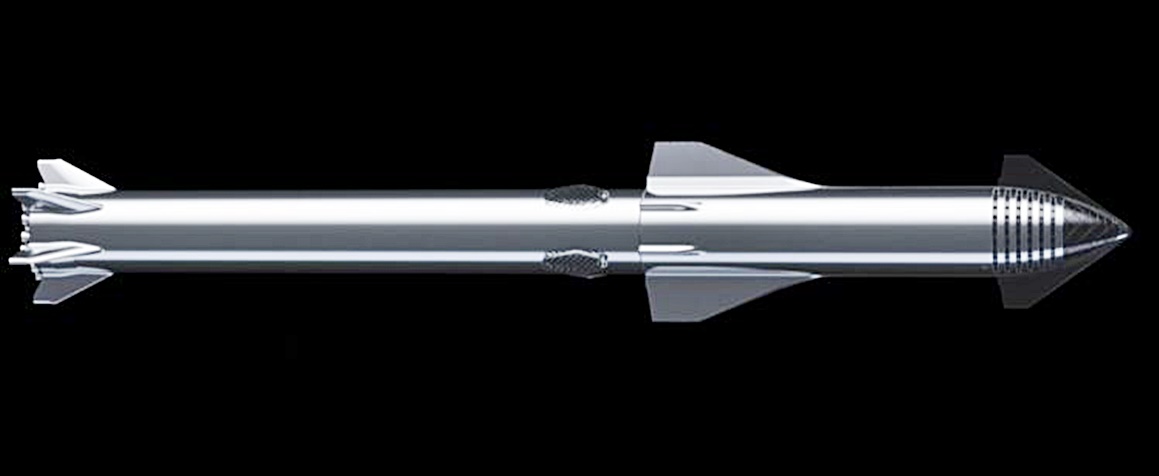
And there's the revolutionary Starship/Super Heavy interplanetary rocket currently being developed by SpaceX to take people to Mars. SpaceX, however, intends to make money off Starship by turning this rocket into a commercial passenger spaceship flying to select countries at record-breaking speed.

SpaceX CEO Elon Musk is pushing ahead with his grand dream of transforming Starship into the world's fastest passenger aircraft. Traveling at more than hypersonic speed, or beyond Mach 5 (6,000 km/h), Starship will cover the 12,000 km distance from New York City to Shanghai in a breath-taking 40 minutes compared to the 15 hours on today's passenger jets.

"Fly to most places on Earth in under 30 mins and anywhere in under 60," boasted Musk back in 2017 about Starship's "earth-to-earth" flights.

Starship, which is designed to transport up to 100 persons to Mars per trip by the decade of the 2030s or 2040s, will fly 100 paying passengers to distant destinations on our planet. Starship will take-off and land at massive launch/landing sites converted from oil drilling rigs that float on the ocean.

Starship Super Heavy rocket from SpaceX

In June 2020, Musk tweeted SpaceX planned to build “floating, superheavy-class spaceports for Mars, moon & hypersonic travel around Earth.”

At launch, Super Heavy (or the first stage booster) lugs more than nine million pounds of liquid fuel. It generates dangerous sonic booms and vibrations when it takes-off and lands, making it necessary to move launch pads onto the ocean for the safety of people and infrastructure nearby.

Musk said SpaceX plans to launch and land Starship/Super Heavy several times a day when its space and earth-to-earth transport business goes into high gear over the next two decades.