(Published in ENRICH magazine, 2022)
THERE WILL BE FILIPINOS on Mars by the 22nd century. Absolutely.
Nothing will stop those with designs on Mars such as the United Arab Emirates (UAE), the United States, SpaceX and The Mars Society from transforming (and later terraforming) the Red Planet into "Earth 2.0" by building cities that will ultimately house millions of Earthlings by the next century.
The laborious process of planetary colonization is optimistically expected to begin by the late second-half of this century after the first humans set foot on Mars, probably during the decade of the 2030s. The UAE, the only government thus far with concrete plans to build a Martian city, and The Mars Society, have said qualified citizens from all countries are welcome to inhabit future cities on Mars.
This invitation also extends to Filipinos. Who knows? One of your grandchildren or great grandchildren might be among the first Filipino immigrants to Mars. But it won’t be easy convincing Pinoys to move to Mars.
On the long trek to Mars, these courageous Filipinos will be bombarded by deadly cosmic radiation; have their health endangered by prolonged weightlessness and their mental health tortured by the absence of any meaningful social life. Life on Mars will be very challenging, to say the least.
Mars itself has high levels of lethal cosmic radiation (a deadly 230 millisieverts per year versus a tame 6.2 millisieverts on Earth); a suffocating 96% carbon dioxide atmosphere and a sub-zero average temperature of around -63°C. There’s also the health dangers posed by Mars’ gravity, which is only 38% that of Earth’s.
Now, by what name shall we call our brave Filipino Martians who will endure the arduous seven month-long, 480 million kilometer voyage to get to live on the fourth rock from the Sun?
The word “Mars tigasin” (“Mars tough”) comes to mind. Or the shorter “Ma-tigasin.” They could also be called “Mars-tapang” (“Mars Brave”), a play on the word “matapang” (“brave”). I salute all of them.
 |
| Photo of the Jezero Crater on Mars taken by the NASA Perseverance rover |
AGI
Filipinos and other humans, however, probably won't be the first to inhabit Mars in numbers. That honor is likely reserved for robots animated by either "Artificial General Intelligence" (AGI) or "Artificial Superintelligence" (ASI).
Artificial intelligence (AI), the “mother” machine intelligence of both AGI and ASI, allows a machine to learn, reason and self-correct as it interacts with the world. In the context of Martian colonization, AI will also help keep people safe by identifying potential dangers. One must always recall Mars is a planet that’s absolutely deadly to humans.
These intelligent machines will pave the way for the safe arrival and survival of humans on the Red Planet. Helper AIs won’t be just any robot like NASA's Perseverance Mars Rover now trekking Mars, but machines infused with AGI that can make more complex decisions and act on them.
It takes a command signal from Earth some 20 minutes traveling at the speed of light to reach a rover on Mars. This means rovers can't immediately react to unexpected situations that arise on the Red Planet and need AI to meet this challenge.
Perseverance (or Percy) comes equipped with a type of AI called "Artificial Narrow Intelligence" (ANI). Its ANI, for example, helps Percy avoid obstacles detected by its 23 digital cameras without waiting for commands from NASA.
Narrow AI, as it’s also called, is the most common AI variant and the one in widespread use today. It was given the name Narrow AI because it can only carry out one task at a time but can do so very well. Examples of Narrow AI are Google Search; smart voice assistants such as Apple's Siri and self-driving cars developed by Waymo LLC, a sister company of Google, Inc.
Ongoing space exploration missions by the European Union and the United States, for example, use AI and machine learning capabilities in their operations. AI plays a key role in mission planning, autonomous navigation and maneuvering without the need for ground control and spacecraft maintenance.
 |
| AGI thinks, therefore it is |
AGI, the colonizer
On the other hand, the more advanced type of AI called AGI will be needed to help humans colonize Mars. AGI refers to an AI that can perform a range of cognitive tasks such as thinking and reasoning at levels similar to or better than humans.
AGI is expected to transform future spacecraft carrying humans to Mars into fully cognitive machines capable of making critical decisions in flight without relying on commands from the Earth. Untethering from the Earth will also give colonists more time to perform essential functions such as surviving deep space.
Still a work in progress, AGI is expected to become a useful reality by the 2050s. It's slated to pilot the first interstellar probe bound for the nearby galaxy, Alpha Centauri, under NASA's 2069 Alpha Centauri mission.
The question facing NASA and its ken is whether to wait for AGI (also called Deep AI) to come online before sending people to live on Mars en masse. The high stakes involved in transplanting humans to Mars countenance caution, however. The overriding need to not strew the road to Mars with mangled human corpses seems to indicate AGI machines will get to live there first.
ASI
"What are the chances that the First Martian is an AGI or an ASI?" asked SpaceX CEO and ardent Martian colonist Elon Musk back in December 2018.
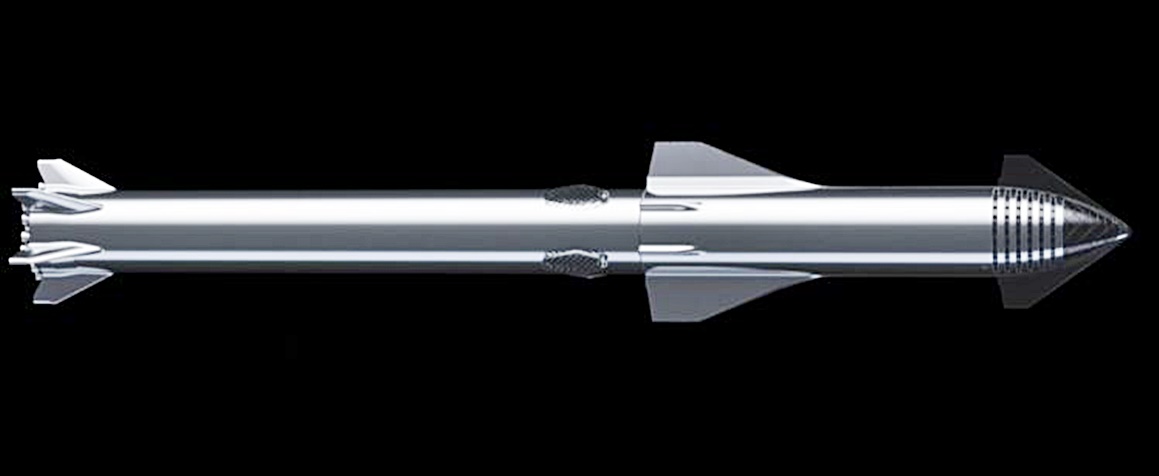
In his earlier musings, Musk was adamant humans would be the first on Mars. Alongside this fantasy are his ludicrous claims of sending the first crewed mission to Mars by 2024 and using robots to build a base for humans on the planet before 2030. Extended delays in developing SpaceX's Starship/SuperHeavy rockets that will become the space taxis for Mars' colonization have put paid to these ambitions.
Musk has since matured into adulthood following these statements. He now declares there's a 30% chance the first inhabitants of Mars will be ASI machines. The ultimate type of AI, an ASI has cognitive abilities superior to humans and will be capable of complete autonomy. No successful colonization of Mars is possible without ASI.
AGI or ASI machines will prepare the way for the eventual colonization of Mars. They will build the first human habitats on Mars (either by 3D printing or assembling them), as well as the other necessary infrastructure such as oxygen generators humans will need to survive upon setting foot on this hostile planet. It's clear it will take both humans and AI to colonize Mars safely.
"There isn't a battle between robots and humans -- that's comparing apples and oranges," said Dr. James Garvin, chief scientist at NASA's Goddard Space Flight Center.
"We send the robots as our pathfinders and scouts, and they open the frontiers so that we can decide where and when to send the people."
MELTANT-α
Humanoid AI robots such as future versions of the "MELTANT-α (Alpha)" avatar AI robot from Japan will likely be sent to Mars to assist in building planetary infrastructure. MELTIN MMI, the Japanese firm developing MELTANT-α, describes its creation as "a cyborg that transcends boundaries."
MELTANT-α will possess one huge advantage over all other AI robots: its human-like hands that can do most of the things a human hand can do. Using “the world’s most powerful and flexible robotic hands,” MELTANT-α will build Mars bases, repair equipment and even perform surgery on human astronauts.
The key to this cyborg’s human-like hands is its unique bio-signal processing algorithm that allows for highly-accurate real-time analyses of hand movements. The algorithm can process 12 types of complex movements. It can also create motions closely similar to that of human hands "while adding flexibility, speed, power, durability and accuracy. This technology can be 'another body' to use anywhere in the world." Or on other worlds.
Bio-signals are the electrical signals passing through our body’s nervous system. It allows us to move our limbs, and enables our brains to receive information from our senses.
In September 2018, Japan announced its intent to explore the Moon and Mars by deploying MELTANT and its future iterations. Avatar robots will also make possible extremely long-distance missions to the outer planets of our Solar System -- and the exploration of nearby galaxies such as Alpha Centauri and Proxima Centauri -- without placing Japanese astronauts in harm's way.
The Japan Aerospace Exploration Agency (JAXA) is partnering with MELTIN and other Japanese firms to develop MELTANT-α. The partners have begun full-scale development on the MELTANT-α avatar robot for deployment in space.
 |
| Illustration of MELTANT-α on the Moon with a Japanese lunar rover |
“Wisdom” on Mars
MELTANT-α and its AI brethren will play the key role in building cities on Mars inside which humans can exist and thrive while being protected from a planet that wants to kill them. There is no shortage of concepts for Martian cities, but among those making waves today are the UAE’s city, tentatively named “Wisdom,” and the city-state called "Nüwa" from The Mars Society.
On February 14, 2017, the tiny but oil-rich UAE startled the space community by announcing its stunning plan to become the first country on Earth to build the first habitable Martian city by 2117. In sheer size, ambition and boldness, the city of Wisdom dwarfs any existing plan to colonize Mars. In contrast, NASA only intends to establish small surface bases that will house fewer than a dozen scientists at a time.
Wisdom will initially be home to hundreds of people and later to 600,000 humans. Emirati engineers and scientists agree their city will be built by AI robots. Building Wisdom is part of the UAE’s multinational “Mars 2117 Project,” which has a lifespan of 100 years.
"The landing of people on other planets has been a longtime dream for humans. Our aim is that the UAE will spearhead international efforts to make this dream a reality," said Shaikh Mohammad Bin Rashid Al Maktoum, Vice-President and Prime Minister of the UAE and Ruler of Dubai.
Nüwa
In March 2021, the Spanish architectural firm ABIBOO Studio based in Madrid presented a concept based on the latest scientific research for a Martian city-state of five cities, whose capital will be called "Nüwa.” ABIBOO was one among many firms that submitted entries to the Martian cities project organized by The Mars Society and developed by the SONet network, an international team of scientists and academics. Nüwa, or the Empress Wa, is the creator of all humankind in Chinese mythology.
Nüwa, a self-sufficient, excavated, “vertical city,” is expected to accommodate more than one million humans by the 22nd century. Scientists say a rocky Martian cliff on the southern edge of the "Tempe Mensa" region located in the Valles Marineris hemisphere just south of the Martian equator is an ideal site for Nüwa.
The vertical cities will be built into the sides of cliffs in order to protect residents from deadly cosmic radiation, extreme temperatures and the planet’s low atmospheric pressure that will quickly boil the blood of humans unprotected by space suits.
 |
| Nuwa, the city state on Mars |
The cities will feature self-sustained “macro-buildings” built 150 meters inside the cliff rock. Each building, which will be two-storey’s tall, will accommodate up to 4,440 people. The modular macro-buildings will have green areas, urban gardens with animals and pools of water, and spaces dedicated to the arts. The tubular modules will be 10 meters in diameter and 60 meters long.
Manufacturing, industrial sites, food factories, and energy production facilities will be built at the top of the cliff or at the bottom of the valley. Energy will be generated by massive solar arrays. Nüwa’s precious oxygen will largely be produced by plants, and because of this, Nüwans will have a 90% plant-based diet.
"We had to do a lot of analysis based on computing and working with the scientists to try to understand what are the circumstances that we will face," noted ABIBOO founder Alfredo Muñoz.
He believes building the Nüwa city-state is doable from the technical standpoint. He said what will take time is convincing people from around the world to live on Mars despite the immense dangers they’ll face on the journey to the planet and when they live there.
Construction of Nüwa might start as early as 2054 and should be completed by 2100 when the first colonists arrive to start living there.
 |
| Part of the city state of Nüwa |
As for SpaceX, its role will consist solely of transporting settlers to Mars. It now has no intention of constructing a Martian metropolis housing up to one million people.
Eschewing city building is a departure from Musk’s stand in 2016 when he said: "We're figuring out how to take you to Mars and build a self-sustaining city to become a truly multiplanetary species." Musk previously called his city “the next giant leap for humanity.”
But we do know this early SpaceX plans to charge each brave Earthling $200,000 for a seat on Starship/SuperHeavy, which will transport 100 immigrants to Mars at a time. That immense cost will drop to $100,000, claims Musk.
 |
| The NASA Perseverance rover now on Mars has an AI brain. |